To prepare for your first dermatology visit in Korea, you need: a valid passport and Korean visa, an appointment booked 1-2 weeks in advance, a treatment budget of 500,000-3,000,000 KRW, and 2-3 days set aside for your trip. This guide walks you through every step — from visas and booking to transportation, accommodation, the clinic visit itself, and post-treatment care back home.
1. Pre-Departure Preparation
Passport and Visa
| Visa Type | Best For | Maximum Stay |
|---|---|---|
| C-3 Short-Term Visit | Most common — tourism + aesthetics | Up to 90 days |
| C-3-3 Medical Tourism Visa | Specifically for medical purposes | Up to 90 days |
| Visa Waiver / Transit Visa | Available for certain nationalities and policy periods | Varies by policy |
Visa policies change frequently. Always check the latest requirements from the Korean embassy or consulate in your country before booking flights. A valid passport with at least 6 months remaining validity is required.
Book Your Appointment in Advance
This step is critical — Korean dermatology clinics operate almost exclusively by appointment. Walk-ins are rarely accepted.
Booking tips:
– Book 1-2 weeks before arrival (during peak seasons like holidays, book even earlier)
– Contact the clinic via WeChat, WhatsApp, or the clinic’s official channels
– Describe your skin concerns and the treatments you are interested in
– Confirm whether the clinic offers service in your language
SIA Clinic accepts bookings via WeChat and WhatsApp. English-speaking consultants will help you schedule your visit and provide preliminary advice on suitable treatments.
Budget Planning
| Category | Budget Range (KRW) |
|---|---|
| Dermatology treatment | 500,000 – 3,000,000 KRW |
| Round-trip flights | 300,000 – 800,000 KRW |
| Accommodation (2-3 nights) | 120,000 – 400,000 KRW |
| Food and transport | 100,000 – 200,000 KRW |
| Total | 1,020,000 – 4,400,000 KRW |
For many treatments, the total cost including flights and accommodation in Korea is still lower than having the same procedure done domestically in many countries.
2. Getting to Gangnam
From Incheon Airport (ICN)
| Transport Option | Travel Time | Approximate Cost |
|---|---|---|
| AREX Airport Railroad + Subway | ~70 minutes | ~5,000 KRW |
| Airport Bus 6009 (to Gangnam) | ~60-90 minutes | ~16,000 KRW |
| Taxi or Private Car | ~50-70 minutes | ~65,000-80,000 KRW |
AREX + Subway route: Take the AREX to Seoul Station, transfer to Subway Line 2 toward Samseong, then transfer at Express Bus Terminal to Line 9 and ride to Sinnonhyeon Station. This is the most affordable option.
Airport Bus 6009: Direct service to Gangnam area. Comfortable seats with luggage storage — a good balance of convenience and cost.
Taxi: Most convenient if you arrive late at night or have heavy luggage. Use only official airport taxis to avoid overcharging.
From Gimpo Airport (GMP)
Take Subway Line 9 directly to Sinnonhyeon Station — approximately 30 minutes, under 2,000 KRW. Gimpo is significantly closer to Gangnam than Incheon.
3. Accommodation Near Gangnam
Stay near Gangnam Station or Sinnonhyeon Station for the easiest access to SIA Clinic (1-minute walk from Sinnonhyeon Station Exit 3):
| Category | Area | Price Range |
|---|---|---|
| Budget | Business hotels near Gangnam Station | 60,000 – 100,000 KRW/night |
| Mid-range | Boutique hotels near Sinnonhyeon Station | 100,000 – 150,000 KRW/night |
| Luxury | 5-star hotels in Cheongdam-dong or Apgujeong | 200,000+ KRW/night |
Tips:
– Book accommodation within walking distance of the clinic so you can return to your hotel to rest immediately after treatment
– Many hotels in the Gangnam area are accustomed to medical tourism guests
– Sinnonhyeon Station area is quieter than the main Gangnam Station strip while still having plenty of restaurants and shops nearby
4. Treatment Day Walkthrough
SIA Clinic Visit Timeline (Example)
| Time | Step | Details |
|---|---|---|
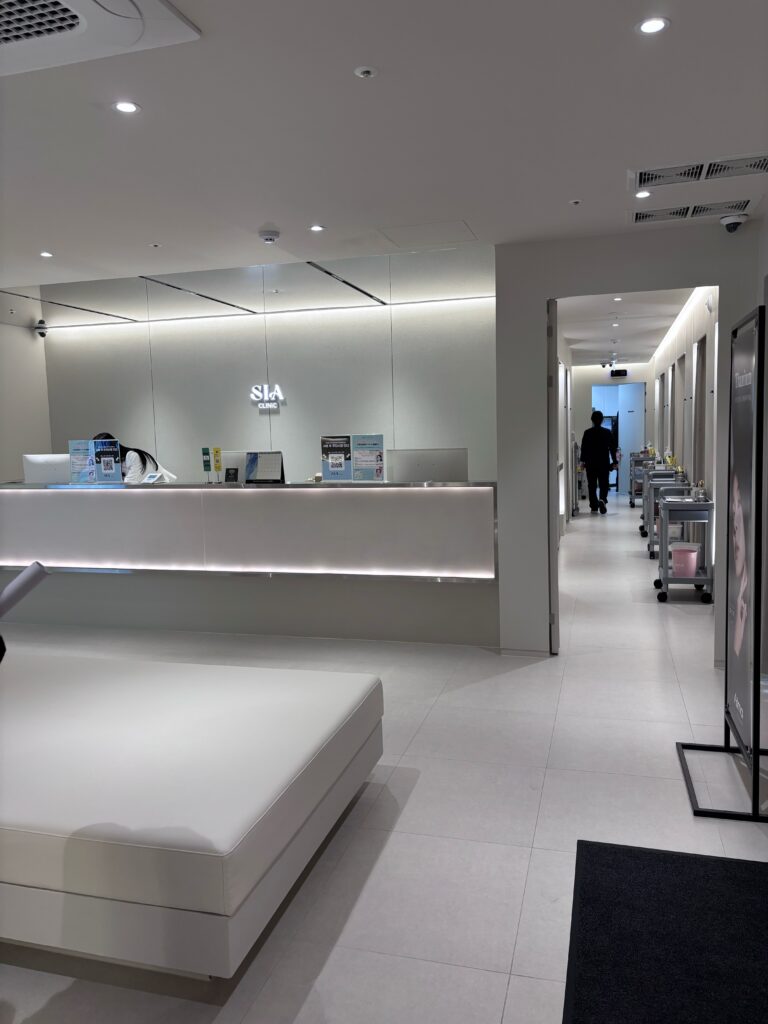
| 9:30 | Arrival and registration | Check in at the front desk, fill out patient intake form with your passport |
| 9:40 | Skin analysis | Mark-Vu diagnostic imaging system captures a comprehensive picture of your skin condition |
| 9:50 | One-on-one consultation | English-speaking consultant reviews your diagnosis, discusses your concerns, and recommends a treatment plan |
| 10:10 | Treatment confirmation | Review and confirm the treatment plan and pricing, sign consent form |
| 10:20 | Pre-treatment preparation | Makeup removal, numbing cream application (if needed, depending on treatment) |
| 10:40 | Treatment | Performed by the clinic director personally |
| 11:30 | Post-treatment care | Cold compress, recovery mask, and soothing care |
| 11:50 | Aftercare briefing and checkout | Post-treatment instructions explained, payment processed, follow-up arranged |
The entire process takes approximately 1.5-2.5 hours, depending on the complexity of your treatment.
5. What to Bring on Treatment Day
- Passport — required for patient registration
- Booking confirmation — screenshot or message from the clinic
- Hat and face mask — to shield your face after treatment when going outside
- Sunscreen (SPF50+ or higher) — essential for post-treatment skin protection
- Comfortable clothing — choose button-down or zip-up tops to avoid pulling anything over your face after a facial procedure
- Payment method — international credit card (Visa/Mastercard) or cash (KRW)
6. Post-Treatment Care
General Guidelines (All Treatments)
- Avoid applying makeup for at least 24 hours after treatment
- Avoid saunas, steam rooms, and hot environments for 1 week
- Apply SPF50+ sunscreen daily without exception
- Keep your skin clean and well-moisturized
- Follow all aftercare instructions provided by your doctor
Treatment-Specific Aftercare
| Treatment | Common Reactions | Recovery Time | Special Notes |
|---|---|---|---|
| Skin Boosters (e.g., Rejuran, Salmon Injection) | Mild redness, tiny injection marks | 1-2 days | Normal activities can resume the same day |
| Dermal Filler | Mild swelling | 2-3 days | Avoid pressing or massaging the injection site for 48 hours |
| Thread Lifting | Swelling, mild soreness | 3-7 days | Avoid opening mouth wide or intense exercise for 2 weeks |
| Pico Laser | Redness, mild warmth | A few hours to 1 day | Strict sun protection is critical |
| Thermage (RF) | Mild swelling and redness | 1-2 days | Normal daily activities are not affected |
7. After Returning Home
Consistent aftercare at home is essential to maintain your results:
Sun protection is the single most important factor. If you had any laser or light-based treatment, strict daily sunscreen use (SPF50+, reapplied every 2-3 hours when outdoors) is mandatory for at least 3 months.
Moisturizing and repair: Use gentle, restorative skincare products containing ceramides or hyaluronic acid. Avoid products with active acids (AHA, BHA, retinol) for at least 2 weeks post-treatment.
Maintenance schedule:
– Skin boosters — repeat every 2-4 weeks for optimal results (can be done at a local clinic)
– Thread lifting and fillers — consider touch-ups after 6-18 months depending on the product used
– Laser treatments — follow-up sessions as recommended by your doctor, typically 3-6 months apart
If you experience any unusual reactions after returning home, contact SIA Clinic via WeChat or WhatsApp for remote aftercare consultation.
Frequently Asked Questions (FAQ)
Q1: I do not speak Korean. Can I still visit a Korean dermatology clinic on my own?
Absolutely. Choose a clinic that provides service in your language. SIA Clinic offers full English support throughout the entire process — from booking and consultation to treatment and post-care follow-up.
Q2: Is it safe to get dermatology treatments in Korea?
Korea’s medical system is strictly regulated by the government. Dermatologists must complete a 4-year specialist residency and pass national board examinations. Choosing a licensed, accredited clinic ensures a high standard of safety. Korea has one of the most mature medical aesthetics industries in the world.
Q3: Can I fly home the same day as my treatment?
For skin boosters, most laser treatments, and Thermage, you can resume normal activities immediately after the procedure. However, it is recommended to stay at least 1 additional night in case of any unexpected reactions that require a follow-up visit. For thread lifting and filler procedures, plan to stay 2-3 days.
Q4: Are the products used in Korean clinics the same as in my home country?
Many brand names are the same globally (e.g., Botox, Juvederm, Restylane). However, Korea is the origin country or Asia-Pacific headquarters for many of these products, meaning supply chains are shorter and product versions may be more current. Your consultant can confirm exactly which products will be used during your visit.
Q5: Do I need to bring my own interpreter?
Not if you choose a clinic with multilingual staff. SIA Clinic has dedicated English-speaking consultants who accompany you throughout the entire visit. There is no need to hire an outside interpreter.
Planning your first dermatology trip to Korea? Contact SIA Clinic’s consultation team via WeChat or WhatsApp — we will help you arrange everything from booking to aftercare.
Published by SIA Clinic, Gangnam, Seoul. This article is for informational purposes only. Visa policies, transportation costs, and treatment prices may change over time. Please confirm the latest information before making travel plans.